LESSON 1
Mia's Table
Food as a Window to Culture
50 minutes
CCSS.ELA-LITERACY.RL.3.1, CCSS.ELA-LITERACY.RL.3.3, CCSS.ELA-LITERACY.W.3.3
🖶 Download PDF
Learning Objectives
- Students will: (1) identify how food reflects cultural heritage and geography; (2) explain the concept of cultural fusion using evidence from the text; (3) analyze what a recipe reveals about the culture it comes from; (4) apply vocabulary related to culture and food traditions.
Students explore how the foods families eat carry stories about history, geography, and identity. Through Mia's experience bringing her family's Vietnamese food to school, students discover that a dish can be a doorway into understanding where people come from and what they value.
Texts
Mia's Table
📝
After Reading
Summarize What You Read
Comprehension checkpoint — included on the text page above
Recipe
📝
After Reading
Summarize What You Read
Comprehension checkpoint — included on the text page above
Key Vocabulary
📝 Vocabulary Worksheet
12 key terms — printable worksheet for students
Discussion Prompts
🗨 Discussion
Think about a food that is special or traditional in your family. Where does it come from — what place, culture, or family member? Share one thing that food tells about your family's history or heritage.
🗨 Discussion
Mia says: "Every food has a story." The poem says food needs memory, history, hands, and stories as ingredients. Do you agree that food carries stories? What story does your lunch today tell about you?
🗨 Discussion
The poem says food needs "hands — not just any hands — the ones that showed yours how to hold the knife, how to stir the pot." Whose hands taught you something important — about cooking, or about anything else? Why does it matter WHO teaches us, not just WHAT we learn?
🗨 Discussion
Both the story and the poem say food is slow — it takes time, memory, and many generations. In our world today, a lot of things are fast (fast food, fast delivery, fast messages). Why do you think some things should stay slow? What do we lose when we rush?
Comprehension Questions
Hover over a question to see the teacher guide.
1
What is the MAIN IDEA of "Mia's Table"? Use TEXT EVIDENCE from the story to support your answer.
Guide: Main idea: Food carries the history, culture, and traditions of the people who make it — and sharing food helps people understand each other. Evidence: Mia explains how bánh mì combines French and Vietnamese history ("A long time ago, France ruled Vietnam"). She also says, "You can read a culture like a map — just by looking at what people eat." By the end, the whole class has started to "see each other's lives differently" through the food they share.
2
In the story, Mia talks about heritage, ancestors, and tradition. Using TEXT EVIDENCE, explain what these three words mean AND how they are connected to food in the story.
Guide: Heritage is "everything our ancestors passed down to us — our language, our songs, our food." Ancestors are "family members from long, long ago." Tradition is their "special way of doing things, passed down like a gift from person to person." In the story, food connects all three: bánh mì is a tradition that preserves the heritage of Mia's ancestors — her grandmother learned it from her mother, who learned it in Saigon. Jordan makes the same discovery about tamales: "She learned from her mom, who learned from her mom."
3
The poem "Recipe" says the first ingredient is memory and the third ingredient is hands. What do you think the poet means? These are not food ingredients — so what kind of "recipe" is the poet really describing?
Guide: The poet is not describing how to make a specific dish — they are describing how to make a family recipe that carries culture and love. "Memory" means the smells, feelings, and moments from the past that go into cooking. "Hands" means the family members — grandmothers, parents — who physically taught you how to cook: "the ones that showed yours how to hold the knife, how to stir the pot." Together, these ingredients make food that carries history and connection, not just flavor.
4
Both texts — the story AND the poem — share the same big idea about food. Compare what each text says. What does the story show about food's importance? What does the poem say? What do they agree on?
Guide: The story shows that food carries culture and history through real characters: Mia explains how bánh mì connects to Vietnamese-French history, and Jordan realizes tamales carry his Mexican heritage. The poem makes the same point in a different way, listing memory, history, hands, and stories as the true ingredients. Both texts agree that food is "slow" and takes time because it carries generations of meaning — not just recipes, but relationships, identities, and the people who came before us.
Assessment Activity
Assessment Activity: Food as a Map — Classifying and Connecting
Print Activity →Marzano Level: Analysis (Classifying + Generalizing)
Part 1 — Sort the Ideas (10 min)
Both texts in this lesson — the story "Mia's Table" AND the poem "Recipe" — say that food is more than just something you eat. Read each idea below and sort it into one of two categories:
Category A: Food carries the past (things that connect food to history, memory, and ancestors)
Category B: Food builds community (things that show food bringing people together)
Ideas to sort:
- Bánh mì was shaped by French and Vietnamese history together
- Mia and Jordan discover their grandmothers both teach through cooking
- The poem says one ingredient is "hands — the ones that showed yours how to hold the knife"
- Jordan's whole family gathers to make tamales — tías, cousins, little brother, everyone
- The poem says the dish "traveled across an ocean, changed a little here, added something there"
- The class picnic ends with students seeing each other's lives differently
- Mia's grandmother learned to make bánh mì from her own mother in Saigon
- The poem says: "Mix them all together. Don't rush."
💡 Some ideas might fit BOTH categories. That's okay — explain why!
Part 2 — Make a Connection (8 min)
Choose ONE food from your own family or community. It can be something you eat at home, at a celebration, or that a family member makes.
Answer these three questions:
1. What is the food, and where does it come from?
2. Does it connect to Category A (the past), Category B (community), or both? Explain.
3. What is ONE story behind this food — something your family has told you, or something you wonder about?
Part 3 — Write a Big Idea (5 min)
Both texts agree on one big idea about food. Finish this sentence in your own words:
*"Food is more than something you eat. It is also __________."*
Use at least ONE detail from the story AND one from the poem to explain your big idea.
Part 1 — Sort the Ideas (10 min)
Both texts in this lesson — the story "Mia's Table" AND the poem "Recipe" — say that food is more than just something you eat. Read each idea below and sort it into one of two categories:
Category A: Food carries the past (things that connect food to history, memory, and ancestors)
Category B: Food builds community (things that show food bringing people together)
Ideas to sort:
- Bánh mì was shaped by French and Vietnamese history together
- Mia and Jordan discover their grandmothers both teach through cooking
- The poem says one ingredient is "hands — the ones that showed yours how to hold the knife"
- Jordan's whole family gathers to make tamales — tías, cousins, little brother, everyone
- The poem says the dish "traveled across an ocean, changed a little here, added something there"
- The class picnic ends with students seeing each other's lives differently
- Mia's grandmother learned to make bánh mì from her own mother in Saigon
- The poem says: "Mix them all together. Don't rush."
💡 Some ideas might fit BOTH categories. That's okay — explain why!
Part 2 — Make a Connection (8 min)
Choose ONE food from your own family or community. It can be something you eat at home, at a celebration, or that a family member makes.
Answer these three questions:
1. What is the food, and where does it come from?
2. Does it connect to Category A (the past), Category B (community), or both? Explain.
3. What is ONE story behind this food — something your family has told you, or something you wonder about?
Part 3 — Write a Big Idea (5 min)
Both texts agree on one big idea about food. Finish this sentence in your own words:
*"Food is more than something you eat. It is also __________."*
Use at least ONE detail from the story AND one from the poem to explain your big idea.
Recommended Anchor Texts
Extend the themes of this lesson with these recommended reads for Grade 3.
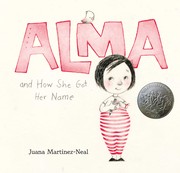
Alma and How She Got Her Name

The Water Princess

Dreamers

Where Are You From?
More from CultureLit